
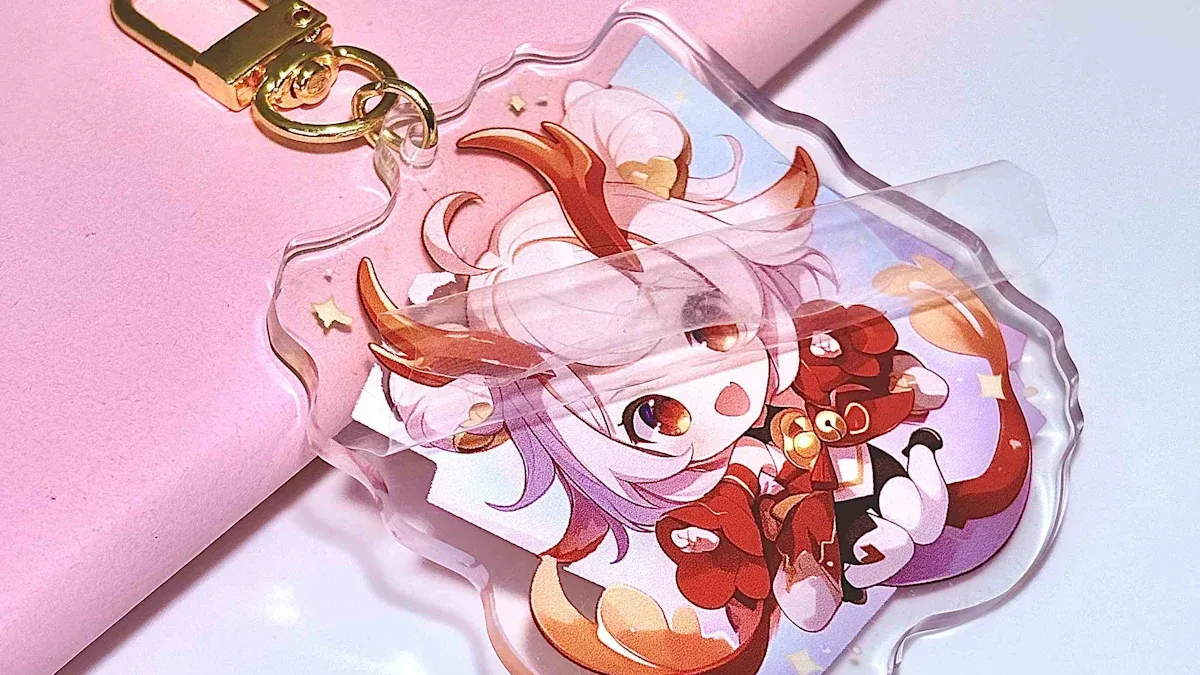
You can determine acrylic pricing for custom acrylic-keychains and charms by adding up the cost of materials, labor, packaging, and shipping. Online calculators for all-products consider the complexity of the project, materials used, tolerances, extra steps, and any special requirements. Yakelike supports artists, Etsy sellers, and small brands with OEM/ODM services, low MOQ, strict quality checks, and worldwide shipping. If you’re looking for competitive acrylic pricing on bts-collection items, follow this guide step by step.
Key Takeaways
- Learn about the main things that affect acrylic prices, like material, labor, overhead, and market needs. – Pick the best material quality and thickness so your keychains and charms are strong but not too expensive. – Follow a simple formula to find your final price and make sure you count all costs for the right price. – Use online calculators to get price estimates fast by entering your project details. – Check and change your prices often to keep up with other sellers and any changes in material or labor costs.
Acrylic Pricing Basics
Key Cost Factors
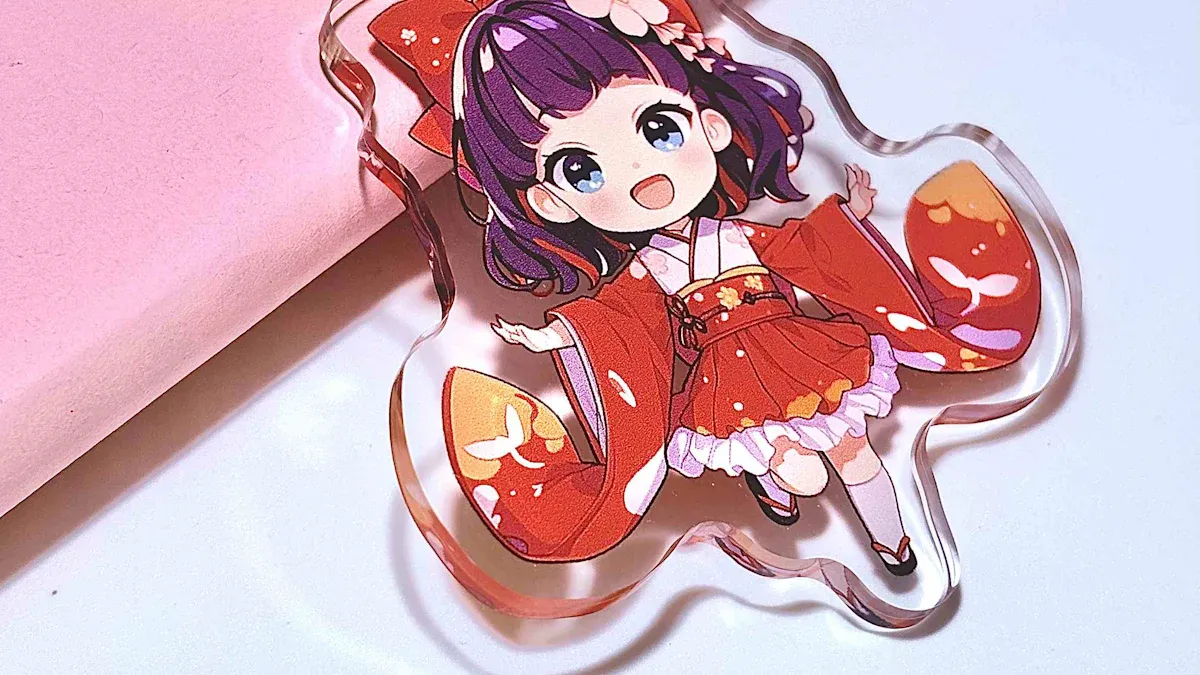
It is important to know what makes acrylic pricing go up or down for custom keychains and charms. Each thing in the list changes how much you pay in the end. Here is a table that shows the main cost factors:
| Cost Factor | Description |
|---|---|
| Material Costs | The cost of acrylic sheets and other materials used in production. |
| Labor | Time spent on design, production, and communication with clients. |
| Overhead | Additional costs such as equipment wear, software subscriptions, and utilities. |
| Market Considerations | Pricing strategies based on market research and customer perception. |
Material cost is the base of acrylic pricing. You pay for acrylic sheets and also for extra things like keychain hardware or packaging. Labor cost means paying for the time spent designing, cutting, and finishing your charm. Overhead is money spent on things like machine care and software. Market considerations help you pick a price that matches what customers want and what other sellers charge.
Material Quality and Thickness
Material quality and thickness change acrylic pricing in different ways. You pick the thickness of your acrylic sheets for your project. Thicker acrylic keychains need more material and take longer to make. You pay more, but they last longer and look better. Thicker designs let you add detailed engraving or printing, which makes them special.
- Thicker acrylic keychains use more material and take more time.
- Higher price gives you better durability and looks.
- You can do detailed engraving or printing with thicker acrylic.
- Thicker acrylic keychains can be customized more and last longer.
- You spend more, but you get better quality and a unique charm.
You also need to think about the grade of acrylic. Cheaper options use thin sheets and may not last long. Mid-tier products use thicker acrylic and can have double-sided printing. Premium options use hand-finished acrylic, UV coating, and custom engraving. Here is a table that shows the usual price differences:
| Price Tier | Price Range | Characteristics |
|---|---|---|
| Budget tier | $3–$8 | Bulk-packaged PVC charms, inconsistent thickness, best for short-term use. |
| Mid-tier | $9–$18 | Single acrylic charms, 2.5–3 mm thickness, double-sided print, good durability. |
| Premium tier | $20+ | Hand-finished acrylic, UV coating, custom engraving, suitable for gifting. |
You choose the tier based on your budget and the quality you want. Material cost and acrylic pricing change when you pick different thickness and grade.
Shipping Impact
Shipping changes acrylic pricing more than you might think. You pay for packaging and delivery, which adds to the material cost. Shipping costs depend on the size, weight, and where your order is going. Bigger or heavier acrylic keychains cost more to ship. If you order from another country, the price goes up even more.
Tip: You can save money on shipping by ordering more at once or picking lighter designs. Smaller packages cost less to ship and help you keep your acrylic pricing low.
You need to add shipping when you figure out the total material cost. Packaging keeps your acrylic sheets and charms safe while they travel. You also need to think about the minimum order quantity (MOQ) that factories set, because it can change shipping rates and the total acrylic pricing.
Price Calculation Method
Step-by-Step Formula
You need a simple way to set fair prices for custom acrylic keychains and charms. Start by writing down every cost for your project. This means you should include material, labor, packaging, and shipping. Different companies use different ways to set prices. You can see some of these ways in the table below:
| Pricing Strategy | Description |
|---|---|
| Cost Plus Method | Adds the cost of a product/service to the expected profit to determine the final price. |
| Market Pricing Method | Based on market demand and competition, adjusting prices according to customer willingness to pay. |
| Pricing Elasticity Method | Considers how sensitive price changes are to changes in quantity demanded, influencing pricing strategies. |
The cost plus method works well for most custom acrylic projects. First, add up all your costs. Then, multiply the total by a markup number. Many artists and sellers use a formula like this:
Final Price = (Material Cost + Labor Cost + Packaging Cost + Shipping Cost + Overhead) x Markup
You can pick a markup of 2 or 3. This covers your costs and gives you profit. For example, if your total cost is $5, you can set your price at $10 or $15. This way, you can compete with others and pay for everything you need.
You can also find material cost by area or weight. If you use square feet, measure your acrylic sheet and multiply by the price per square foot. If you use weight, multiply the sheet’s weight by the price per pound. Always remember to include every cost in your math.
Tip: Write down each cost for every order. This helps you keep track and change your price method if you need to.
Using Online Calculators
Online calculators make it easier to find your price. You can type in things like artwork size, material thickness, and finish. The calculator checks each cost and gives you a price idea. Many calculators use special numbers to help you set a fair price.
You can upload CAD files to get a quick quote. This lets you send your design and get a fast price based on your costs. The calculator looks at your art, size, and how hard it is to make. It also checks what people want and how well-known the artist is. You get a price range that fits your project.
- Online calculators check artwork size, material, and finish.
- They use data to give you a good price.
- You can see charts that show how prices change.
- You can change the numbers for your own project.
- The calculator helps you make smart choices and set fair prices.
Note: Online calculators give you a price range based on your costs and project details. For the best price, ask a pro or a factory.
Example: Custom Acrylic Table Pricing
Let’s look at a custom acrylic table as an example. You can use this price method to find the right price. Start by writing down every cost:
- Material Cost: Measure the acrylic sheet for the table. Find the area and multiply by the price per square foot.
- Labor Cost: Guess how many hours you need to cut, polish, and put together the table.
- Packaging Cost: Add the cost of wrapping and boxes.
- Shipping Cost: Check the weight and size of the table. Find the shipping price for your area.
- Overhead: Add machine care and software fees.
Suppose your costs look like this:
- Material Cost: $50
- Labor Cost: $30
- Packaging Cost: $10
- Shipping Cost: $40
- Overhead: $20
Total cost: $150
Now, use the price method:
Final Price = (Material Cost + Labor Cost + Packaging Cost + Shipping Cost + Overhead) x Markup
Final Price = ($50 + $30 + $10 + $40 + $20) x 2
Final Price = $150 x 2 = $300
You can set your price at $300 for the custom acrylic table. This pays for every cost and gives you profit. If you want more profit, use a markup of 3. Always check your costs and change your price method for each project.
Callout: Use this step-by-step price method for custom acrylic keychains, charms, and tables. You can compete with others and pay for all your costs.
Product Complexity and Special Features
Shape and Size
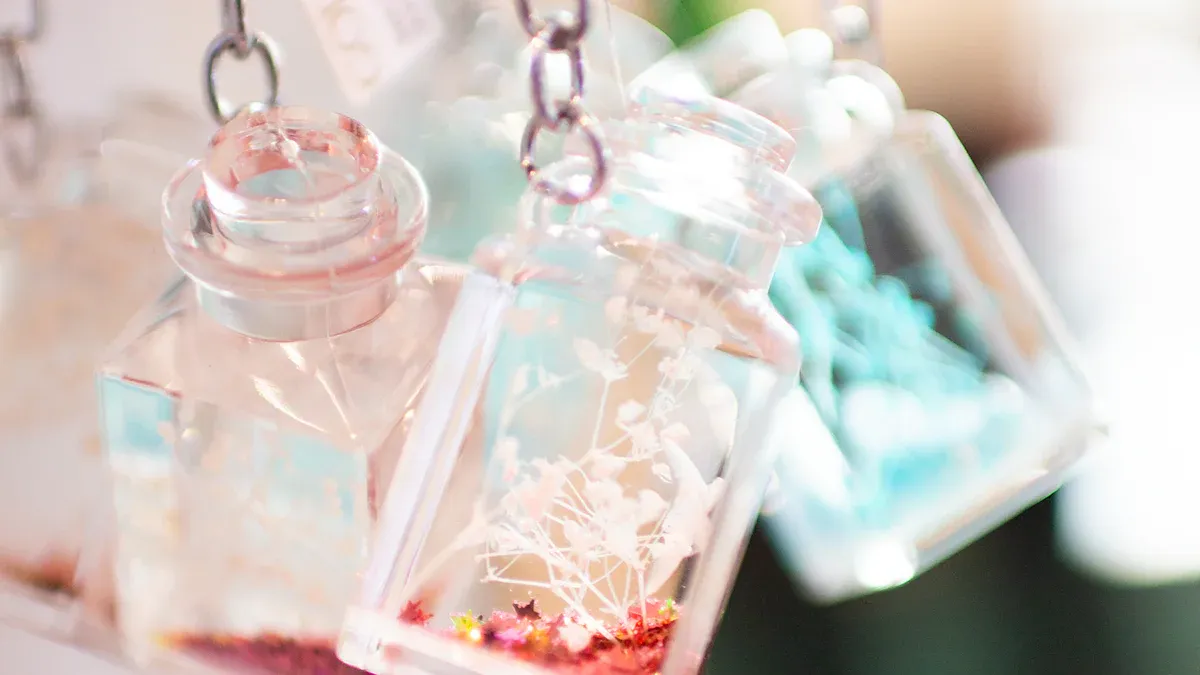
Think about size and how hard the design is when setting prices. Bigger keychains use more material, so they cost more. If the shape has lots of tiny details, it takes longer to make. This makes the price go up. A small keychain costs less than a big one with fancy edges. The table below shows how size and amount change the price:
| Size/Quantity | Price per Unit | Total Price |
|---|---|---|
| 1″ | $2.08 | $1.38 at 100 |
| 2″ | $2.22 | $1.44 at 100 |
| 3″ | $2.48 | $1.75 at 100 |
| 4″ | $2.92 | $2.08 at 100 |
| 5″ | $3.29 | $2.48 at 100 |
| 6″ | $3.66 | $2.85 at 100 |
You can also look at this chart to see how prices change with size:
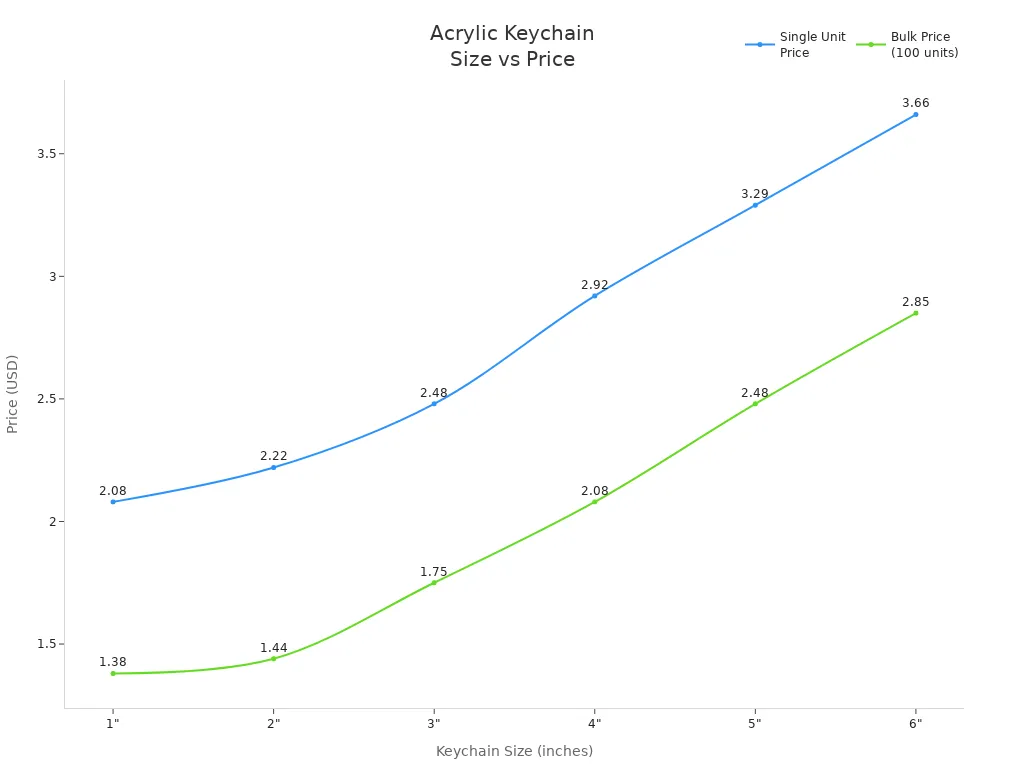
Every order is different because of size and design. Bigger shapes and harder designs need more material and work. This means you pay more.
Printing and Finishes
Printing and finishes can change the price of acrylic charms. You can pick printing on one side or both sides. Printing on both sides costs more because it takes extra steps. UV printing makes colors bright and stops scratches, but it costs more than digital printing. Epoxy coating makes charms stronger and shiny, but adds a little to the price.
You can pick special finishes to make your charm look cool. Here are some common choices:
| Printing/Finishing Option | Description |
|---|---|
| Foreground / 3D Printing | Multiple layers for a 3D effect |
| Foil Stamping | Gold or silver foil for shiny patterns |
| Holographic / Prism Finish | Shiny, shard-like film |
| Colored Acrylic | Transparent or tinted for strong color |
| Mirror Acrylic | Reflective surface for color-changing effect |
Tip: Special finishes like glitter, holographic, or epoxy make your charm better and stronger, but also cost more.
The average cost for these finishes is between $0.45 and $0.85 each. Shipping can cost from $80 to $200, depending on how many you order and where they go. Size and design also change how much you pay for printing and finishes.
Acrylic Display Case Example
Let’s look at an acrylic display case to see how size and design change the price. A simple case costs less because it uses easy shapes and not much material. If you add things like special locks, lights, or custom shapes, the price goes up. Fancy designs need more work and materials, so they cost more.
If you want a display case with cool details, you have to pay extra. Bigger cases or ones with tricky designs cost more than plain ones. This example helps you see how harder designs make all acrylic products cost more.
Note: Always check size and design before you set a price for any acrylic display case or custom acrylic item.
Market Comparison and Bulk Orders
Researching Competitors
You should see what other sellers charge for custom acrylic keychains and charms. Start by checking their websites and online shops. Look at their prices for products that are like yours. Pay attention to the size and features of each item. Some sellers include extra services or finishes in their price. Others ask for more money if you want special shapes or bigger sizes. You should also read reviews to see if customers like their quality and delivery.
Tip: Write down prices for items with the same size and features. This helps you know if your price is fair or too high.
Bulk and Wholesale Pricing
Bulk and wholesale pricing is not the same as regular pricing. If you order lots of acrylic products, making them gets harder. For example, custom honeycomb acrylic sheets need special steps to make. The cost changes because of the materials and how careful workers must be. Standard acrylic sheets are easier to price, but honeycomb designs cost more because they need extra work and special materials. You need to know these things to get the best price for big orders.
If you buy more items, sellers often give you a lower price for each one. This happens because they can make more at once and spread out the costs. Ask for a list that shows the cost for materials, labor, and packaging. Check the size of each item, because bigger products can make the total cost go up.
MOQ and Discounts
Minimum order quantity (MOQ) is the smallest number you must buy. Some makers ask for a high MOQ, but others let you buy just one. You can see the differences in the table below:
| Manufacturer | Minimum Order Quantity |
|---|---|
| Manufacturer A | 250 |
| Manufacturer B | No minimum |
| Manufacturer C | No minimum |
| Vivipins | 1 |
| Manufacturer D | 10 |
| Manufacturer E | 3 |
| Manufacturer F | No minimum |
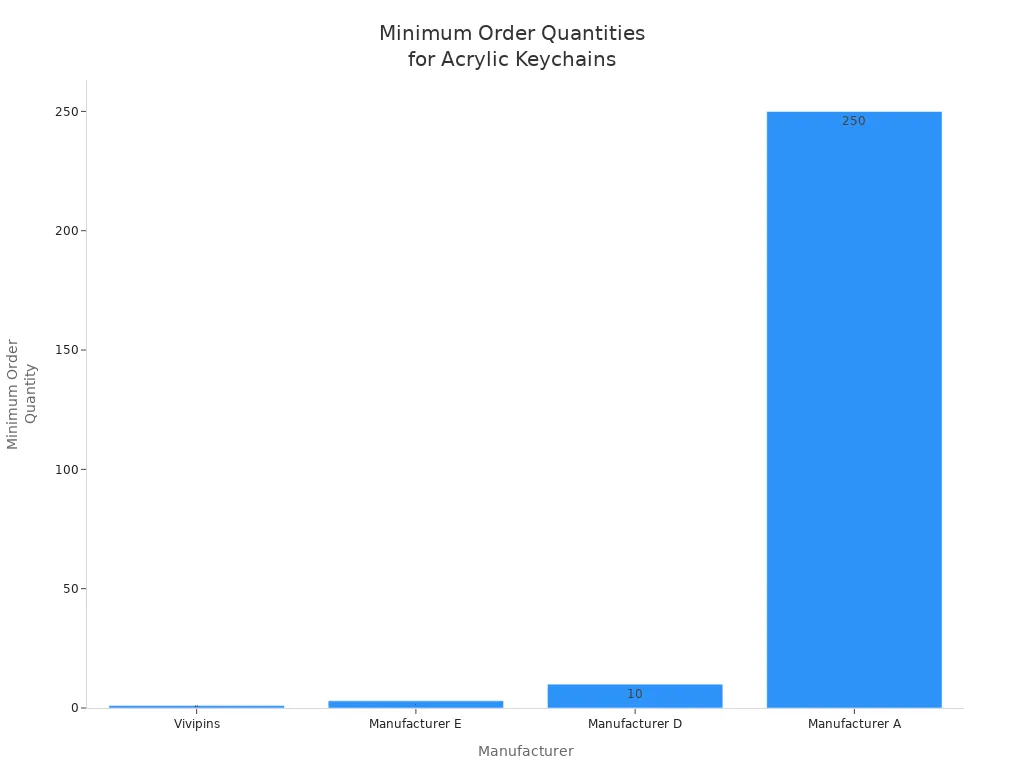
You can get discounts if you buy more items. Sellers may lower the price for each item when you order a lot. This helps you save money and keep your costs low. If you have a small business or sell on Etsy, look for sellers with low MOQ and flexible prices. Yakelike gives OEM/ODM services for big orders, low MOQ, and worldwide shipping. You can trust their experience to help you get the best price for your custom acrylic products.
Callout: Always check the MOQ and ask about discounts before you order a lot. This helps you plan your money and pick the best seller.
Adjusting Your Pricing
Monitoring Costs
You need to watch your costs closely to keep your acrylic pricing accurate. Material prices can change fast. Labor costs may go up if you hire new staff or use advanced machines. Shipping fees often rise during busy seasons. You should track these changes every month. Make a simple table to record your costs:
| Cost Type | Last Month | This Month | Change |
|---|---|---|---|
| Material | $100 | $110 | +$10 |
| Labor | $50 | $55 | +$5 |
| Packaging | $20 | $22 | +$2 |
| Shipping | $40 | $45 | +$5 |
You can use this table to spot trends. If you see costs going up, you can adjust your prices. You should also check your overhead, like software fees or machine maintenance. Keep a record of every expense. This helps you stay organized and avoid surprises.
Tip: Review your costs after every big order. This helps you catch mistakes and keep your pricing fair.
Updating Prices Over Time
You must update your prices as costs change. If material prices rise, your profit may drop. You can use a formula to check your new price:
New Price = (Updated Costs) x Markup
You should compare your prices with other sellers. If your prices are too high, customers may leave. If your prices are too low, you may lose money. Look at market trends and adjust your prices every quarter. You can use a list to guide your updates:
- Check material and labor costs.
- Review packaging and shipping fees.
- Compare your prices with competitors.
- Adjust your markup if needed.
- Update your website or shop listings.
You keep your business strong by updating prices often. Customers trust you when your prices match the quality and market value.
Note: Regular price updates help you stay competitive and protect your profit.
You figure out the price for custom acrylic keychains and charms by looking at all the costs. This includes material thickness, sheet size, special features, and how many you want. Picking the right way to calculate price helps you pay for everything and compete with others. Check your prices often because trends and materials can change. You can ask Yakelike for a quote or sample to see the quality before you buy a lot. Go to Yakelike to get a custom quote or sample for your next project.
FAQ
How do you calculate the price for a diy project acrylic keychain?
First, add up all your costs. This means materials, labor, packaging, and shipping. After that, multiply the total by your markup. You can use online calculators for a fast guess. Always check your measurements before you begin.
What materials required for custom acrylic charms?
You need acrylic sheets and keychain hardware. You also need printing supplies and packaging. Pick the right thickness and grade for your design. Make sure you have everything before you start.
How do measurements affect acrylic pricing?
The size of your charm changes the price. Bigger charms use more acrylic and cost more. Always measure your design with care. Check your numbers twice so you do not make mistakes.
Can you make diy acrylic charms at home?
Yes, you can make diy acrylic charms at home. You need acrylic sheets and a cutting tool. You also need printing supplies. Start with easy shapes and practice to get better.
What is the best way to save money on shipping?
Order more items at once to save on shipping. Lighter designs and small packages cost less to ship. Ask your supplier about shipping choices and compare prices.
