

When producing custom acrylic merchandise, many buyers focus on printing quality and artwork design. However, another important element is often overlooked — the standee base.
Choosing the correct base design ensures the standee stands securely and looks visually balanced. Understanding acrylic standee base types helps artists and brands create products that are stable, attractive, and easy to display.
In this guide, we explain the most common acrylic standee base types, how to choose the right base size, and how base design affects display stability.
Why Acrylic Standee Bases Matter
The base is responsible for supporting the entire acrylic standee structure. Without a properly designed base, the standee may tilt, wobble, or fall.
A well-designed acrylic standee base improves both product appearance and functionality.
Important reasons why standee bases matter include:
- maintaining standee balance
- supporting larger standee designs
- improving display presentation
- preventing accidental falls
Understanding acrylic standee base design helps manufacturers create reliable display products.
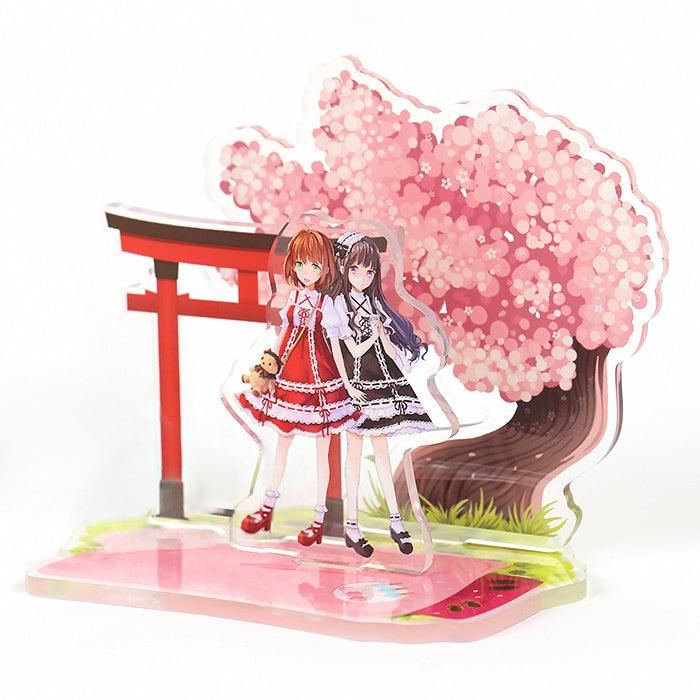
acrylic standee base display example
Common Acrylic Standee Base Types
Manufacturers typically produce several types of bases depending on the design style and product size.
Round Base
Round bases are the most common option because they are simple, stable, and visually balanced.
Square Base
Square bases provide a modern and minimal look. They are often used for character standees with symmetrical designs.
Custom Shape Base
Some brands prefer custom-shaped bases that match the character design or logo.
Custom bases can improve product uniqueness and brand identity.
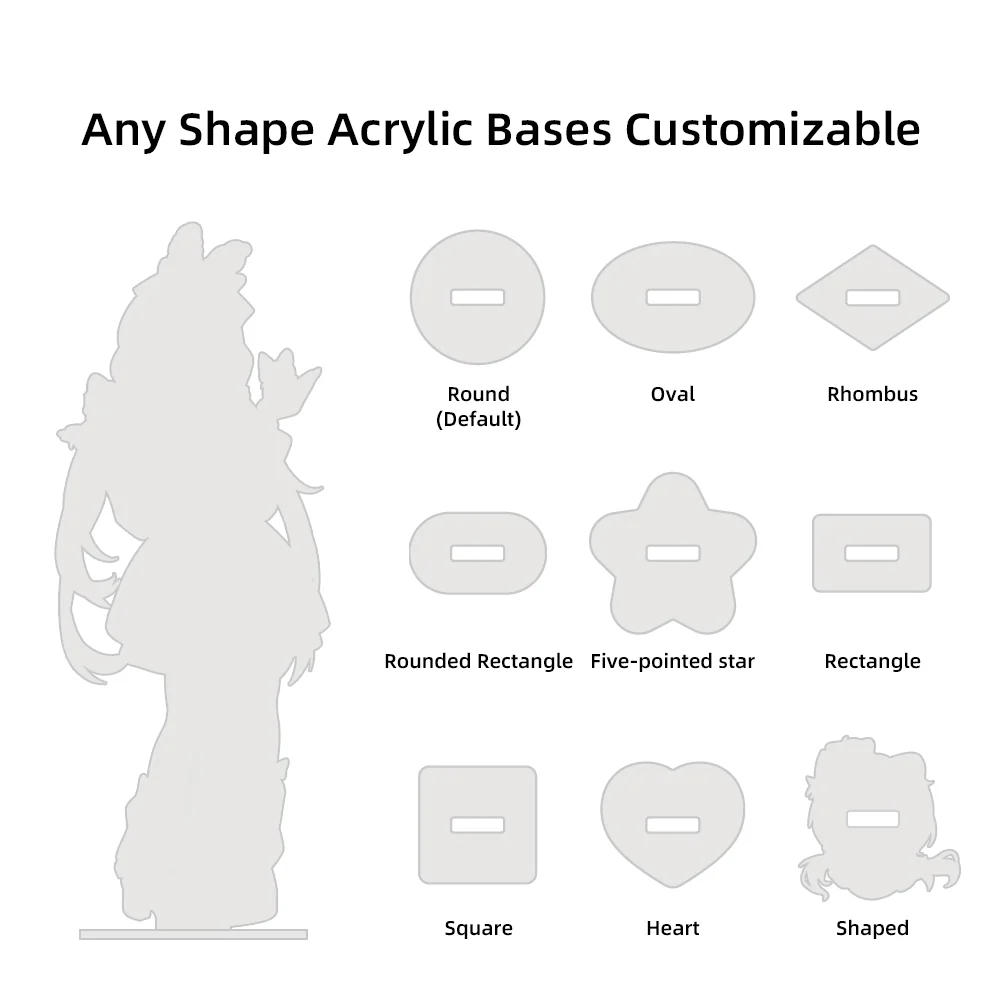
acrylic standee base types comparison
How to Choose the Right Base Size
Choosing the correct base size is essential for maintaining standee balance.
Base size usually depends on the standee height.
Typical base size recommendations:
| Standee Height | Recommended Base |
|---|---|
| 6–8 cm | 3–4 cm base |
| 8–12 cm | 4–6 cm base |
| 12–18 cm | 6–8 cm base |
| 18–25 cm | 8–10 cm base |
Larger standees require larger bases to maintain stability.
You can also read our detailed standee size guide:
👉 Custom Acrylic Standee Sizes Guide
/custom-acrylic-standee-sizes
large acrylic standee base stability example
Base Slot Design
Another important part of acrylic standee base design is the slot.
The slot connects the standee figure to the base.
Manufacturers usually design the slot to match the acrylic thickness so that the standee fits securely.
If the slot is too wide, the standee may become unstable. If it is too narrow, assembly becomes difficult.
Most acrylic standees use precision laser cutting to ensure accurate slot dimensions.
Material Thickness for Standee Bases
Standee bases are usually made from the same acrylic sheet as the standee figure.
Common acrylic standee thickness options include:
- 3 mm acrylic
- 4 mm acrylic
- 5 mm acrylic
If you want to learn more about thickness options, read this guide:
👉 Acrylic Standee Thickness Guide
/acrylic-standee-thickness
Production Process
Standee bases are produced during the same manufacturing process as the standee figure.
The production process typically includes:
- UV printing
- laser cutting
- slot precision cutting
- protective film application
If you want to understand the full production process, read this guide:
👉 How Acrylic Standees Are Made
/how-acrylic-standees-are-made
Packaging Considerations
Standee bases must be packaged carefully to avoid scratches during shipping.
Manufacturers usually package standees using:
- protective film
- plastic bags
- bubble wrap
- reinforced cartons
Proper packaging ensures both the standee and base arrive safely.
You can read our packaging guide here:
👉 Custom Acrylic Standees Packaging and Shipping Guide
/custom-acrylic-standees-packaging-and-shipping-guide
Final Thoughts
The base is an essential component of acrylic standee design.
Choosing the correct acrylic standee base type improves product stability, display quality, and overall customer experience.
From round bases and square bases to custom shapes, the right base design ensures that standees remain stable and visually appealing.
Understanding acrylic standee base design helps artists, brands, and manufacturers produce standees that look professional and function reliably.
For more information about acrylic materials, you can also read the acrylic overview on Wikipedia:
